
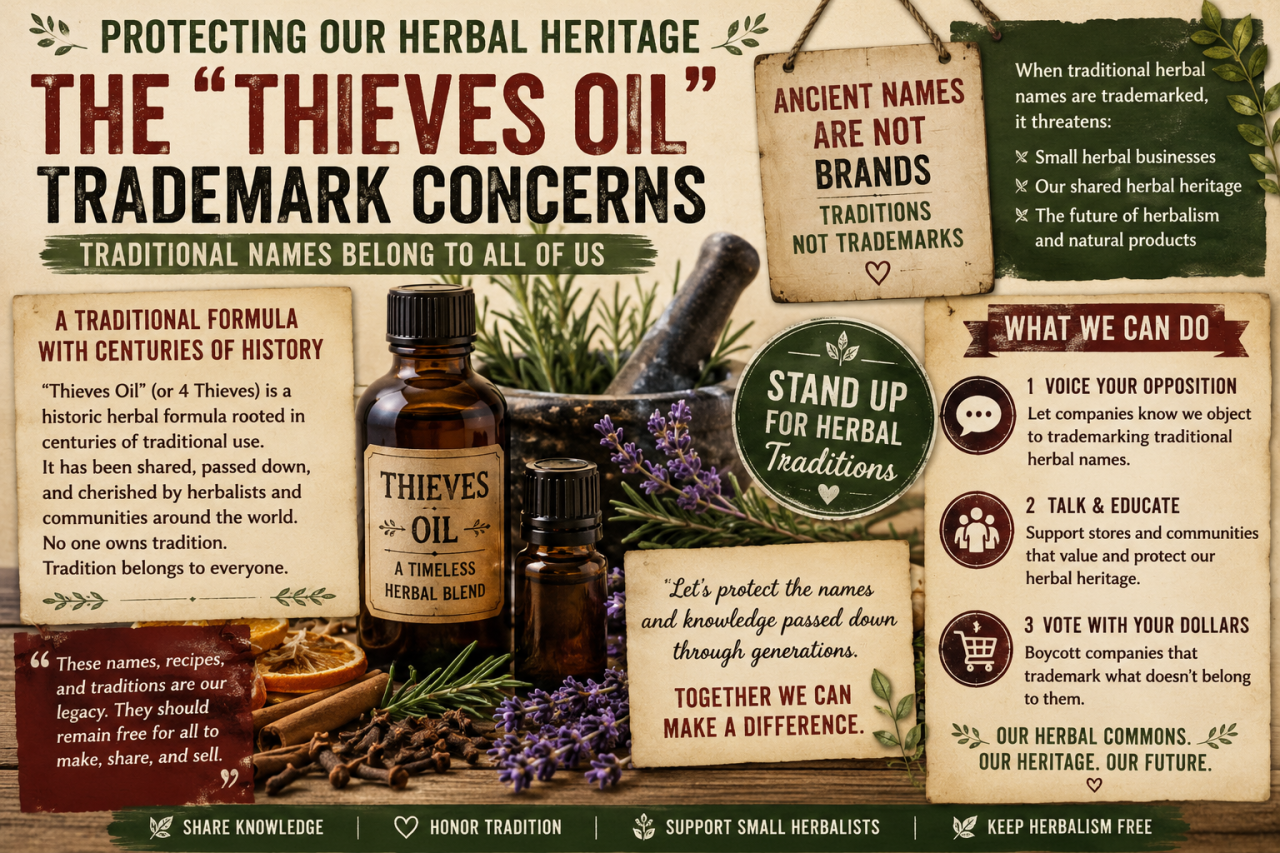
Protecting Traditional Herbal Names: Why the “Thieves Oil” Trademark Sparked Concern
The herbal community has long relied on shared knowledge, traditional recipes, and names that have been passed down through generations. In recent years, however, concerns have grown about the trademarking of historic herbal names that many practitioners view as part of the public herbal commons.
One example that sparked widespread discussion was the trademark registration and enforcement surrounding the name “Thieves Oil”, a term associated with centuries-old herbal folklore and traditional formulations.
Why Herbalists Were Concerned
For many herbalists, the issue extended beyond a single product or company.
The concern centered on a broader question:
Can names connected to traditional herbal preparations become exclusive commercial property, even when they have been used within the community for generations?
The discussion became especially important following earlier disputes involving other traditional herbal terms such as Fire Cider, raising fears that additional long-standing names could face similar restrictions.
Many herbal practitioners worried that if historical names became unavailable for general use, small businesses could face significant challenges marketing products they had made and sold for years.
Reports of Trademark Enforcement
Community concern increased after reports emerged that small herbal businesses had received notices related to the use of terms associated with traditional herbal products.
One widely discussed example involved a small herbal seller offering a vinegar preparation inspired by the historic “Four Thieves Vinegar” tradition. The seller reportedly received a trademark complaint that resulted in the removal of a product listing from an online marketplace.
For many in the herbal community, this highlighted the practical consequences that trademark disputes can have for independent producers and small businesses.
A Broader Conversation About Herbal Traditions
The discussion surrounding the Thieves Oil trademark became part of a larger movement focused on protecting traditional herbal language and preserving access to community knowledge.
Herbalists emphasized that their concerns were not necessarily directed at specific companies or products, but rather at the long-term implications of trademarking names that many consider part of shared cultural heritage.
The movement argued that herbal formulas, recipes, and names that have existed for decades—or even centuries—should remain accessible to everyone who continues to make, teach, and share them.
What Supporters Advocated For
Members of the herbal community encouraged several forms of constructive engagement:
1. Share Your Perspective
Supporters encouraged respectful communication with businesses and organizations involved in trademark disputes to express concerns about the ownership of traditional herbal terminology.
2. Support Independent Herbal Businesses
Many community members emphasized the importance of supporting small herbal companies and local producers who continue to preserve and share traditional knowledge.
3. Promote Education and Awareness
Educating consumers, retailers, and fellow practitioners about the history of traditional herbal products was viewed as an important step toward protecting community traditions.
4. Make Purchasing Decisions That Reflect Your Values
Some individuals chose to support businesses whose practices aligned with their views regarding traditional knowledge and community ownership of herbal terminology.
Why This Conversation Matters
The discussion surrounding the Thieves Oil trademark highlighted a growing challenge facing many traditional communities:
How should intellectual property law interact with cultural traditions, shared recipes, and historical terminology?
While trademark law plays an important role in protecting brands and preventing consumer confusion, communities also continue to debate how best to preserve names and practices that predate modern commercial use.
The herbal community has increasingly referred to this concept as protecting the Herbal Commons — the shared language, traditions, and knowledge that have been freely exchanged and preserved across generations.
Looking Ahead
The conversations sparked by both the Thieves Oil and Fire Cider trademark disputes continue to influence discussions about herbal traditions today.
For many practitioners, these cases reinforced the importance of documenting herbal history, educating new generations of herbalists, and remaining engaged in conversations about how traditional knowledge should be protected.
The central message remains unchanged:
Traditional herbal knowledge grows strongest when it is shared, preserved, and passed forward responsibly for future generations.