
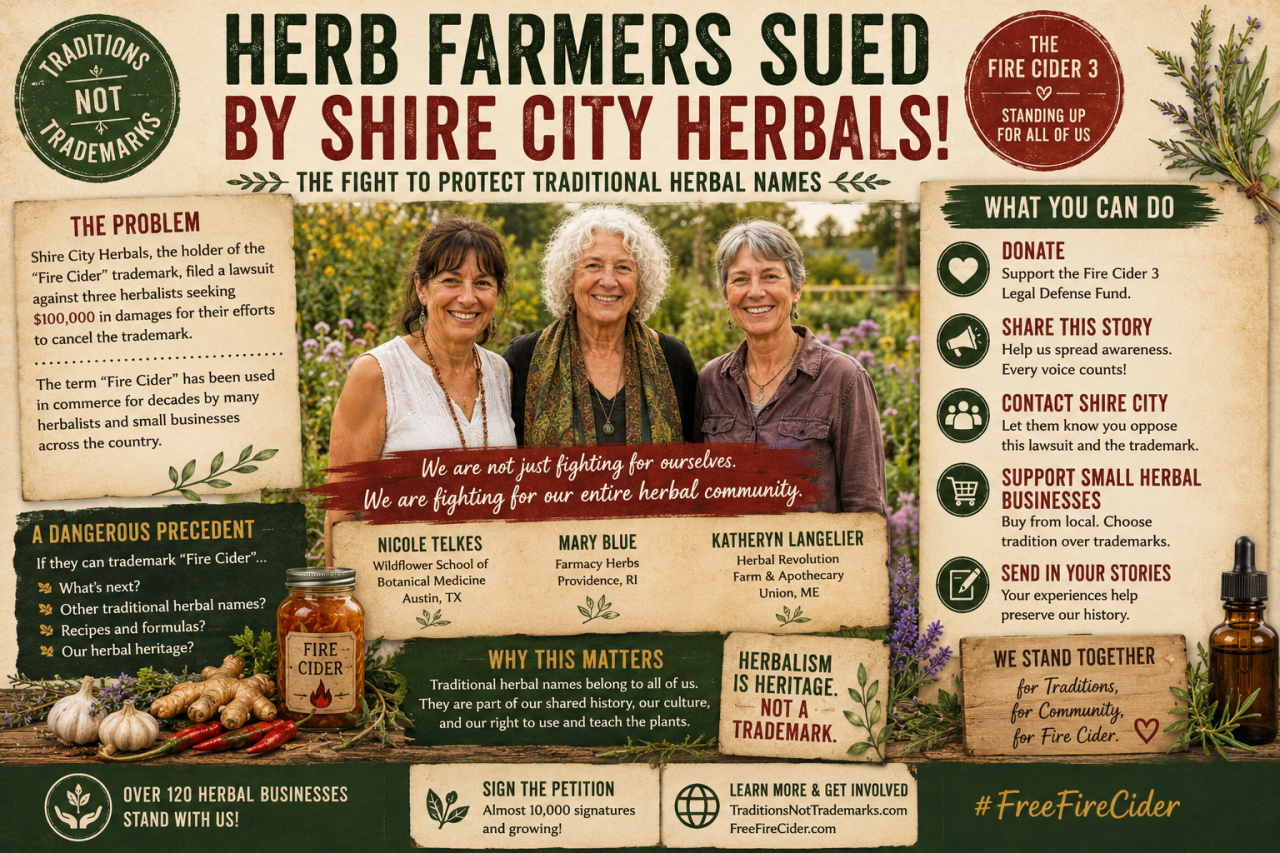
Herbalists Sued Over the Fire Cider Trademark
What began as an effort to protect a traditional herbal term soon became one of the most significant legal battles the American herbal community had ever faced.
In 2015, three herbalists involved in the movement to challenge the trademark registration of “Fire Cider” found themselves at the center of a federal lawsuit. Their participation in the effort to preserve a shared herbal tradition had evolved into a national conversation about trademarks, community knowledge, and the future of small herbal businesses.
The Fire Cider 3
The herbalists involved in the legal challenge became widely known as the Fire Cider 3:
- Nicole Telkes
- Mary Blue
- Katheryn Langelier
Together, they represented a larger grassroots movement seeking cancellation of the federal trademark registration for the term “Fire Cider.”
Supporters argued that the name had been used within the herbal community for decades prior to trademark registration and had become a generic descriptor for a traditional herbal tonic.
The Trademark Dispute
The petition to cancel the trademark was filed with the United States Patent and Trademark Office in 2014.
Advocates supporting cancellation gathered historical records, product labels, educational materials, publications, and testimony intended to demonstrate longstanding public use of the term within the herbal community.
The central question was simple but important:
Can a traditional community term become exclusive commercial property if it was already widely used by others?
A Federal Lawsuit
As the trademark challenge gained national attention, a separate civil lawsuit was filed against the three herbalists in federal court in Springfield, Massachusetts.
The lawsuit sought damages related to the defendants’ alleged activities connected to the movement challenging the trademark registration.
For many within the herbal community, the legal action became symbolic of a broader conflict between traditional knowledge and modern intellectual property protections.
Legal Representation and Support
The Fire Cider 3 were represented by attorneys from Verrill Dana LLP.
Their legal team argued that generic terms and commonly used product names should remain available for public use and that legal mechanisms existed to challenge trademarks believed to have been granted in error.
The case attracted widespread attention throughout the herbal industry and beyond.
More Than One Product Name
Supporters of the movement emphasized that the case extended beyond Fire Cider itself.
Many feared that if longstanding herbal names could become private trademarks, other traditional recipes and product names might eventually face similar restrictions.
Questions were raised about the broader implications for traditional foods, beverages, and community knowledge that have historically existed outside of exclusive ownership structures.
For many observers, the lawsuit represented an important test case for how intellectual property law would interact with cultural and traditional terminology.
Standing Together as a Community
The response from the herbal community was immediate and substantial.
Supporters organized educational campaigns, shared historical evidence, raised awareness through media outreach, and contributed to legal defense efforts.
Herbal businesses, educators, farmers, and practitioners from across North America publicly expressed support for protecting traditional herbal language and preserving access to commonly used terminology.
The phrase “Traditions Not Trademarks” quickly became the defining message of the movement.
Supporting Small Herbal Businesses
The controversy also highlighted the important role small herbal companies play in preserving plant knowledge, community education, and traditional medicine practices.
Many supporters encouraged consumers to:
- Learn about the history of traditional herbal products.
- Support local herbal businesses and producers.
- Share educational resources about herbal traditions.
- Participate respectfully in public conversations surrounding trademark policy and traditional knowledge.
A Movement Bigger Than a Lawsuit
The Fire Cider case ultimately became more than a trademark dispute.
It evolved into a national discussion about ownership, cultural heritage, and the preservation of traditional practices that have been shared across generations.
Regardless of legal outcomes, the movement succeeded in bringing unprecedented attention to the importance of protecting community traditions and the herbal commons.
Looking Forward
The legal battle would continue for several more years, eventually becoming one of the most influential cases in modern herbal history.
For the Fire Cider 3 and their supporters, the goal remained clear:
To ensure that traditional herbal names, recipes, and community knowledge remain accessible to the people who created, preserved, and shared them for generations.