
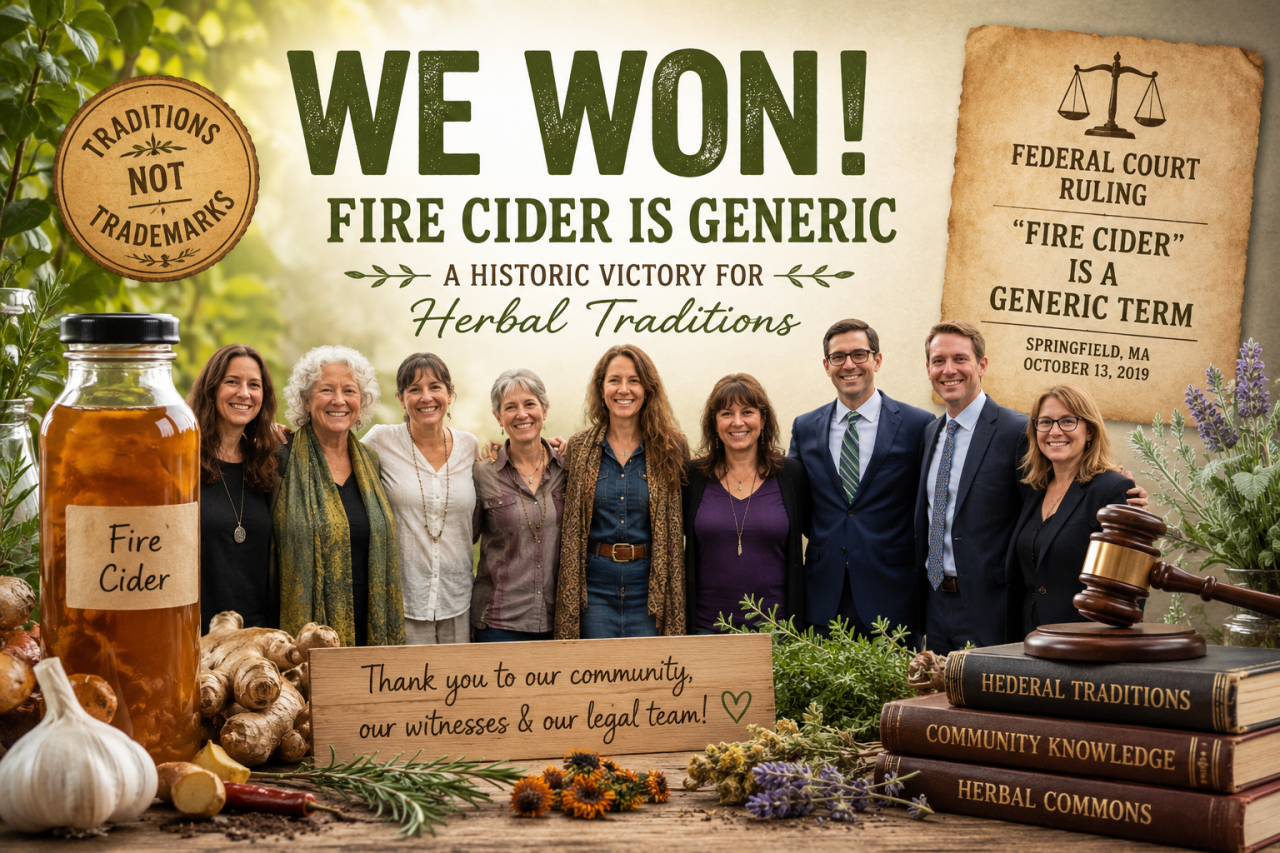
Fire Cider Victory: A Historic Win for Herbal Traditions
In October 2019, the herbal community celebrated a landmark legal victory that reaffirmed the importance of protecting traditional knowledge and shared cultural language. After years of legal proceedings, a federal court ruled that “Fire Cider” is a generic term, not a privately owned trademark.
This decision marked a major milestone for herbalists, small businesses, educators, and traditional medicine advocates across the United States.
A Long Journey Comes to an End
The case centered around three herbalists affectionately known as the “Fire Cider 3”:
- Kathi Langelier of Herbal Revolution in Maine
- Mary Blue of Farmacy Herbs in Rhode Island
- Nicole Telkes of Wildflower School of Botanical Medicine in Texas
Their federal trial took place in Springfield, Massachusetts, lasting nine days and involving years of preparation, research, testimony, and support from members of the herbal community nationwide.
After reviewing the evidence, Judge Mark Mastroianni issued a detailed 40-page decision concluding that Fire Cider had long been used as a common name for a traditional herbal preparation and therefore qualified as a generic term.
Why This Decision Matters
The ruling extended far beyond one recipe or one product name.
By recognizing Fire Cider as a generic term used within the herbal community, the court established an important legal precedent: a term does not need to be widely recognized by the general public to be considered generic. If a relevant community has historically used a term commonly and descriptively, that usage matters.
This principle provides valuable protection for traditional practices, community knowledge, and shared cultural language.
The decision has since become an important reference point for future disputes involving attempts to trademark longstanding community terminology.
The Strength of the Herbal Community
The outcome was made possible through years of collaboration, advocacy, and support from herbalists, educators, farmers, customers, and supporters across the country.
Witnesses traveled long distances to testify, community members attended court proceedings, prepared meals, offered encouragement, and stood in solidarity throughout the case.
The experience created lasting friendships and demonstrated the resilience and unity of the herbal community.
Gratitude to the Legal Team
The Fire Cider 3 were represented by the Portland, Maine-based law firm Verrill Dana LLP.
Their legal team dedicated years of work to researching the history of Fire Cider and presenting evidence demonstrating its longstanding generic use within the herbal tradition.
Their efforts played a critical role in securing this historic outcome.
Looking Ahead
Following the court’s decision, efforts continued to formally complete the trademark cancellation process with the United States Patent and Trademark Office.
The broader vision emerging from the case included:
- Creating a reference library of generic herbal terms.
- Building an “Herbal Commons” to help preserve traditional language.
- Encouraging thoughtful research before attempting to trademark names connected to long-standing traditions and community practices.
- Supporting respectful stewardship of herbal knowledge for future generations.
A Victory Shared by Many
The Fire Cider decision was not simply a legal victory; it was a community victory.
It demonstrated what can happen when individuals come together to defend traditions, protect shared language, and preserve access to cultural knowledge.
The movement’s message remains as relevant today as it was in 2019:
Traditions, Not Trademarks.
Together, the herbal community helped ensure that Fire Cider remains a name that belongs to everyone who has made, taught, shared, and celebrated this traditional herbal remedy for generations.
Originally celebrated on October 13, 2019, this decision remains one of the most significant legal victories for the modern herbal movement.